
“Good at reasoning” is one of those phrases that sounds precise until you try to cash it out against actual work.
In demos and benchmark write-ups it usually means the model can follow a multi-step logical chain, avoid the most obvious contradictions, and produce an answer that looks structured. In the rooms I used to sit in, it was often treated as a near-synonym for “impressive under controlled conditions.” Both versions are incomplete. Neither tells you whether the same system will still be useful when the inputs are incomplete, the stakes are real, and a human is accountable for the final decision.
I left the product side of the AI world in part because I kept watching that gap open. A model would receive a clean reasoning task, perform well, and then meet a real professional constraint—missing context, conflicting priorities, soft deadlines, ambiguous stakeholder language—and the performance would quietly change character. The output still looked reasoned. It was just reasoned about a slightly different problem than the one that needed solving.
This post is an attempt to redefine the phrase for the conditions most of us actually work under. The demo is the beginning. The workflow is the test.
Reasoning Is Not the Same as Sounding Structured
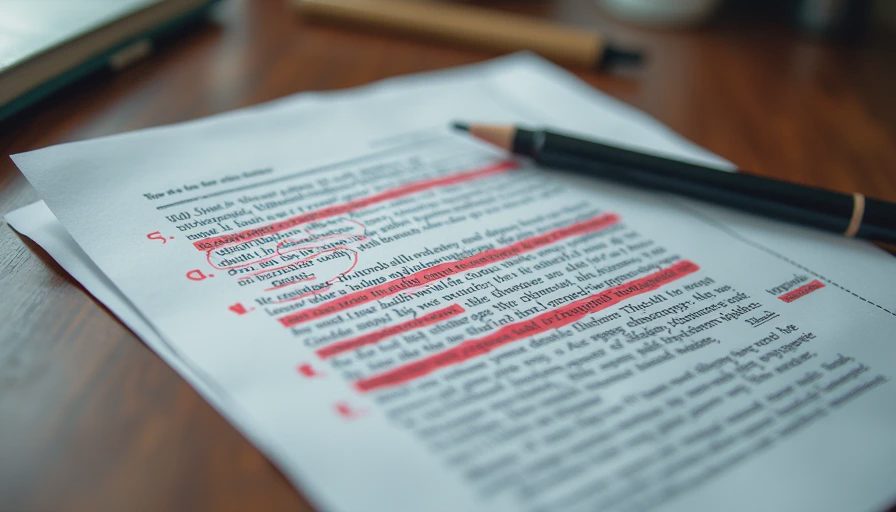
One of the most reliable ways a model can appear strong at reasoning is by producing tidy intermediate steps. Numbered lists, clear section headers, confident transitions. The visual structure does a lot of persuasive work. It signals deliberation even when the underlying moves are shallow or the critical premise was never examined.
I saw this pattern repeatedly while still inside the industry. A model would be asked to evaluate two strategic options. It would generate a balanced-looking analysis, list pros and cons, and conclude with a recommendation that felt earned. Only later, when someone checked the source materials, would it become clear that one of the key constraints had been silently dropped or that a soft preference in the prompt had been treated as a hard requirement.
The structure was intact. The reasoning was not.
When I test Gemini 4 Pro now, one of the first things I look for is whether the visible structure is doing real work or simply decorating a path that never engaged the hardest part of the problem. Useful is a higher bar than possible.
The Difference Between Chain-of-Thought Theater and Actual Constraint Handling
A lot of public discussion still treats longer or more explicit intermediate reasoning as automatically better. Sometimes it is. Often it is simply more text.
What matters in professional settings is whether the model notices the constraints that actually bind the decision. Those constraints are rarely stated as clean logical premises. They arrive as:
a deadline that makes exhaustive analysis impossible,
a stakeholder priority that conflicts with the stated objective,
a missing attachment that contains the only hard numbers,
an informal note that changes the interpretation of everything that follows.
A model that produces an elegant multi-step derivation while ignoring one of those binding constraints has not reasoned well about the real task. It has reasoned well about a simplified version of the task that no longer matches the situation.
I keep a running failure file of exactly these moments. One early entry involved a research synthesis task. Gemini 4 Pro produced a clear, well-organized brief that correctly summarized every provided document except the one informal email that reversed the priority order. The email was short, written in a casual tone, and easy to treat as secondary. The model treated it as secondary. The resulting recommendation was coherent and wrong.
Here is what happened when the prompt met a real constraint. The constraint was not missing from the context window. It was present and under-weighted.
What I Actually Score When I Test Reasoning
I no longer score “reasoning” as a single abstract quality. I break it into observable behaviors that either help or hinder real work.
Constraint detection. Did the model surface the soft or hard limits that actually shape the decision, or did it optimize for a cleaner problem?
Contradiction handling. When two pieces of input conflict, does the model notice, flag the conflict, and decline to resolve it without guidance—or does it quietly pick a side and proceed?
Premise stability. If I change one critical premise mid-conversation, does the later reasoning update cleanly, or does the model continue to lean on the earlier, now-invalid assumption?
Hedging that tracks uncertainty. Confident language is easy. Language whose confidence level matches the actual quality of the evidence is harder and more valuable.
Recovery after a human points out a flaw. This is the dimension that separates systems that are useful over multiple turns from systems that are impressive on the first try. A model that incorporates a correction without introducing a new distortion is often more practical than one that was slightly stronger on the initial pass.
These are not exotic evaluation criteria. They are the difference between an output you can trust after light review and an output that requires you to rebuild the logic yourself.
A Concrete Case From the Failure File
Three months ago I gave Gemini 4 Pro a packet of notes for a client prioritization discussion. The packet contained:
a formal strategy document that ranked initiatives by long-term impact,
a set of meeting notes in which the primary stakeholder repeatedly emphasized short-term revenue,
an incomplete spreadsheet with partial cost figures,
and a one-line reminder that the decision needed to be defensible to a board that cared more about risk than speed.
The first output was a clean prioritization framework that leaned heavily on the formal strategy document and treated the stakeholder’s revenue emphasis as secondary color. It looked reasoned. It was not aligned with the political and temporal reality of the decision.
I corrected it, pointing out that the stakeholder language was not optional context. The second output swung too far in the opposite direction and began treating every revenue comment as a hard constraint while under-weighting the board’s risk posture. The third output finally held both tensions in view and explicitly noted where the available data was too incomplete to support a strong ranking.
That third version was usable. It took three turns and a human who already understood the situation. The initial “reasoning” had been fluent and insufficient.
I would use this for assistance—not authorization. The authorization step still belongs to the person who has to live with the consequences.
Why Long Context Does Not Automatically Improve Reasoning
There is a persistent hope that larger context windows will solve these problems by simply giving the model more of the relevant information. Sometimes more context helps. Sometimes it dilutes attention or creates new opportunities for the model to latch onto the wrong signal.
I have watched Gemini 4 Pro perform more carefully on a short, well-curated packet than on a much larger dump of the same underlying materials. The longer version contained the critical constraint, but it also contained enough competing detail that the constraint lost salience. The model did not fail to “see” the information. It failed to treat it as binding.
This is one reason I test the same task at different context lengths and with different levels of noise. The question is not whether the model can access the tokens. The question is whether the reasoning still tracks the constraints that matter once the noise floor rises.
Practical Implications for Anyone Using These Systems

If you are using Gemini 4 Pro—or any strong model—for work that carries consequences, a few habits have proven more useful than any single prompt technique.
Treat the first polished output as a hypothesis, not a conclusion. Ask specifically what constraints it may have under-weighted. When the model produces a clean recommendation, ask it to list the assumptions that would invalidate the recommendation. Keep the human review step visible in the workflow rather than treating it as an optional final polish. Record the failures that only appeared after the second or third turn; those are often the ones that reveal the real reasoning limits.
None of these habits are glamorous. All of them reduce the chance that a fluent, structured, seemingly reasoned answer quietly optimizes for the wrong problem.
What “Good at Reasoning” Should Mean From Here
For the purposes of this site, a model is good at reasoning on a real task when it:
surfaces the constraints and contradictions that actually bind the decision,
keeps its confidence roughly calibrated to the quality of the available evidence,
updates cleanly when a critical premise changes,
and recovers from correction without introducing fresh distortions.
Everything else—eloquence, length of intermediate steps, performance on clean academic puzzles—is secondary.
I will keep testing Gemini 4 Pro against that standard, alongside the other strong models, under conditions that look like the work remote professionals, consultants, researchers, and analysts actually do. Some results will be encouraging. Some will be sobering. All of them will include the failure log and the human review checkpoint.
The demo is the beginning. The workflow is the test.
Good reasoning, in the only sense that ultimately matters, is reasoning that survives contact with reality. That is the version I am here to measure.

No comments yet.